Industries we serve
AdBoost Media works with DTC ecommerce brands in six industries: pet food and supplies, consumer packaged goods, subscription apps, fashion and apparel, wearables, and consumer tech. Each industry page covers the economics that change the plan, such as reorder cycles, low order values, trial-to-paid rates, returns and long hardware buying decisions.
| Industries | Pet food and supplies, CPG, subscription apps, fashion and apparel, wearables, consumer tech |
|---|---|
| Who AdBoost Media works with | DTC ecommerce brands that sell online, direct to the customer |
| Health, supplements, wellness | Served by our sister brand, AdBoost Health |
| SaaS and B2B software | Served by AdBoost Tech, which also runs the subscription apps work |
| Not offered | Amazon account management |
Which industries does AdBoost Media serve?
AdBoost Media serves direct-to-consumer ecommerce brands in six industries: pet food and supplies, consumer packaged goods (CPG), subscription apps, fashion and apparel, wearables, and consumer tech. Each industry has its own page with the economics, claim rules and campaign choices for that category.
 Pet Food & SuppliesRepeat-purchase DTC growth
 CPGsScale consumer packaged goods
 AppsInstalls that become subscribers
 FashionApparel & accessories at scale
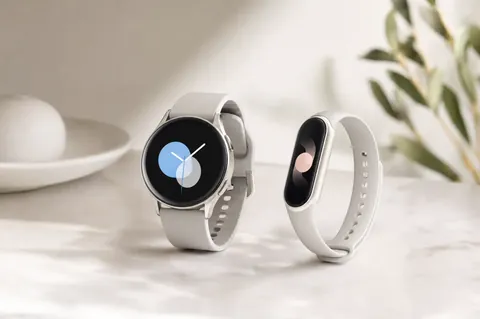 WearablesDevices + recurring revenue
 Consumer ElectronicsConsumer electronics growth
The table is the short version of those six pages: the economic problem that shapes the plan in each industry, and where AdBoost Media’s work starts.
| Industry | The economic problem that shapes the plan | Where the work starts |
|---|---|---|
| Pet food and supplies | Thin first-order margins that only pay back through reorders and subscriptions | Meta, TikTok and Google Ads bid to first-order profit, then Klaviyo flows that move buyers onto repeat orders and subscribe-and-save |
| CPG | Low order values, and retail sales that ad dashboards cannot see | Bundles, multipacks, free-shipping thresholds and subscribe-and-save that raise order value, with Meta, TikTok and Google Ads on top |
| Subscription apps | Revenue arrives after the install, and only from users who pay | Paid social optimized to trial starts, activation and paid retention, not installs |
| Fashion and apparel | Returns, creative that burns out fast, and seasonal drops | Weekly UGC, lookbook and try-on creative, catalog ads and retargeting, and launch plans that build demand before a drop |
| Wearables | A high-priced device decision plus subscription revenue after it | Demo and education creative, retargeting through a long decision, and bids set on device plus subscription value |
| Consumer tech | Price-comparison shoppers and short product cycles | Google Search and Shopping for model searches, plus Meta and TikTok creative that sells value over price |
Guides that go deeper, by industry:
- Pet: how to scale a pet brand with Meta ads
- CPG: the CPG marketing guide and discounts, bundles and shipping offers
- Apps and wearables: why platform and store numbers disagree and why a strong ROAS can still lose money
- Fashion: how to tell when ads need new creative
- Consumer tech: why the product feed now works like ad creative
What changes from one industry to the next?
What changes is the number that decides whether an ad can pay for itself: reorders in pet, order value in CPG, the download-to-paid rate in apps, returns in fashion, subscription attach in wearables, and price position and launch timing in consumer tech. The same Meta campaign can be profitable in one category and lose money in another at an identical cost per purchase.
| Industry | The deciding number | The published fact behind it |
|---|---|---|
| Pet food and supplies | Reorders per customer | Chewy reported Autoship customer sales of 84.6% of net sales in the 13 weeks ended August 2, 2026 (Chewy). Pet food is bought on a schedule. |
| CPG | Order value and retail lift | Ad dashboards cannot see register sales, so retail lift needs a geographic holdout test; Meta Open Source publishes GeoLift, an open-source solution for calculating lift at a geo level, which it notes is not a Meta product (GeoLift). |
| Subscription apps | Download-to-paid rate | RevenueCat’s State of Subscription Apps 2026 puts the median day-35 download-to-paid rate at 10.7% for hard paywalls and 2.1% for freemium apps (RevenueCat, as of October 2026). |
| Fashion and apparel | Return rate | The National Retail Federation estimated that 19.3% of online sales across all categories would be returned in 2025 (NRF). |
| Wearables | Subscription attach and retention | Revenue comes from the device and the membership, and claims must stay within the FDA’s general wellness policy, last updated January 2026 (FDA). |
| Consumer tech | Price position and launch timing | Pre-orders fall under the FTC Mail Order Rule: a seller needs a reasonable basis for any shipping date it states, or for shipping within 30 days if it states none (FTC). |
Illustrative examples (round numbers, not benchmarks)
- Apps. At a $4 cost per install, a 2.1% download-to-paid rate means about $190 in ad cost per paying subscriber ($4 divided by 0.021). At 10.7%, the same install cost is about $37 per paying subscriber. Install cost alone says almost nothing about profit.
- Fashion. A 40% contribution margin means a break-even ROAS of 2.5x on revenue kept after returns. If a fifth of revenue comes back, the platform-reported ROAS has to reach about 3.1x (2.5 divided by 0.8) just to break even, before return shipping and handling, which push it higher.
- Pet. A $50 first order at a 30% contribution margin leaves $15 to pay for the ad. A $35 cost per first order loses $20 on day one and only pays back if the customer really reorders, so the reorder rate has to come from the brand’s own data before bids rise above first-order profit.
Claim rules change by industry too. The FDA treats a pet food intended to treat or prevent disease as a drug (FDA), so pet ads stay away from disease claims. A wearable stays a general wellness product only while its claims stay away from diagnosing or treating a disease. Fashion drops and gadget launches sold as pre-orders carry the FTC shipping rule above.
What about health, supplements and wellness?
Health, supplement, telehealth and wellness brands are served by AdBoost Health, AdBoost Media’s sister brand, not by AdBoost Media. AdBoost Health handles regulated health and telehealth advertising with a compliance-first process.
Where the line falls:
| If you sell | The right team |
|---|---|
| Supplements, vitamins or wellness products for people | AdBoost Health |
| Telehealth or GLP-1 programs | AdBoost Health |
| Pet food, treats, accessories or pet supplements | AdBoost Media, pet food and supplies |
| A wearable sold for fitness, sleep or general wellness | AdBoost Media, wearables |
| A medical device | Not served by AdBoost Media |
What if your category is not listed?
If your brand sells online, direct to the customer, and is not in a regulated health category, book a call anyway. The six industries are where AdBoost Media’s pages go deep, not a closed list: if you sell online and want profitable growth, the call is where fit gets checked.
Four things make that first call useful in any category:
- Contribution margin per order after product cost, shipping, payment fees, discounts and returns. It sets the break-even ROAS and cost per purchase every result is judged against.
- Repeat rate, if customers buy again. It decides how much a first order can cost.
- Average order value, and whether bundles or a shipping threshold could raise it.
- How the product looks on video. AdBoost Media’s paid social runs on short-form demos and creator content, so a product that shows well on camera starts ahead.
Brand fit, the opening audit and what happens after the call are covered on how AdBoost Media works.
Frequently asked questions
Do you work with supplement brands?
No. Supplement, health, telehealth and wellness brands are served by AdBoost Health, AdBoost Media's sister brand, which runs a compliance-first process for regulated health advertising. Supplements for pets are the exception: they sit in AdBoost Media's pet food and supplies work.
Do you work with B2B or SaaS companies?
Yes, through AdBoost Tech. AdBoost Tech is the part of the AdBoost family that runs advertising for SaaS companies and subscription apps, judged on trial starts, booked demos and paying customers rather than leads or installs.
Do you manage Amazon for marketplace brands?
No. AdBoost Media does not manage Amazon accounts or Amazon ads. It runs Meta, TikTok and Google Ads that send shoppers to the brand's own site, and the CPG page covers when sending shoppers to Amazon instead makes sense.
Sources
- Chewy, Chewy Announces Second Quarter 2026 Financial Results, accessed
- RevenueCat, State of Subscription Apps 2026, accessed
- National Retail Federation, 2025 Retail Returns Report, accessed
- Meta Open Source, GeoLift, accessed
- U.S. FDA, FDA's Regulation of Pet Food, accessed
- U.S. FDA, General Wellness: Policy for Low Risk Devices (January 2026), accessed
- U.S. FTC, Business Guide to the FTC's Mail, Internet, or Telephone Order Merchandise Rule, accessed
Not sure your category fits?
Book a 30-minute call with a senior strategist. A free account audit is included, and you leave with a plan you can take to your team either way.
Apply to partner